
🌍 Town Spotlight of the Week: A Day Living in St Lucia – Where the Wildlife Has Right of Way
🌍 Town Spotlight of the Week - St Lucia
Most people think living in St Lucia must feel like living in a holiday town.
They're only half right.
It's more like living inside a nature documentary.
Every morning begins with the same soundtrack. Before the first coffee is poured, the fish eagles are already calling across the estuary. Their unmistakable cry echoes through the trees while the sun slowly rises over the Indian Ocean. Within minutes, hornbills arrive in the garden, vervet monkeys start arguing somewhere in the canopy, and the first tourists wander down the streets with cameras hanging around their necks.
Around here, nobody is really in a hurry.
Life moves to the rhythm of the tides, the weather and, quite often, the wildlife.
After breakfast, I usually head towards the estuary. It's impossible not to stop for a moment and admire it. The water is almost always alive.
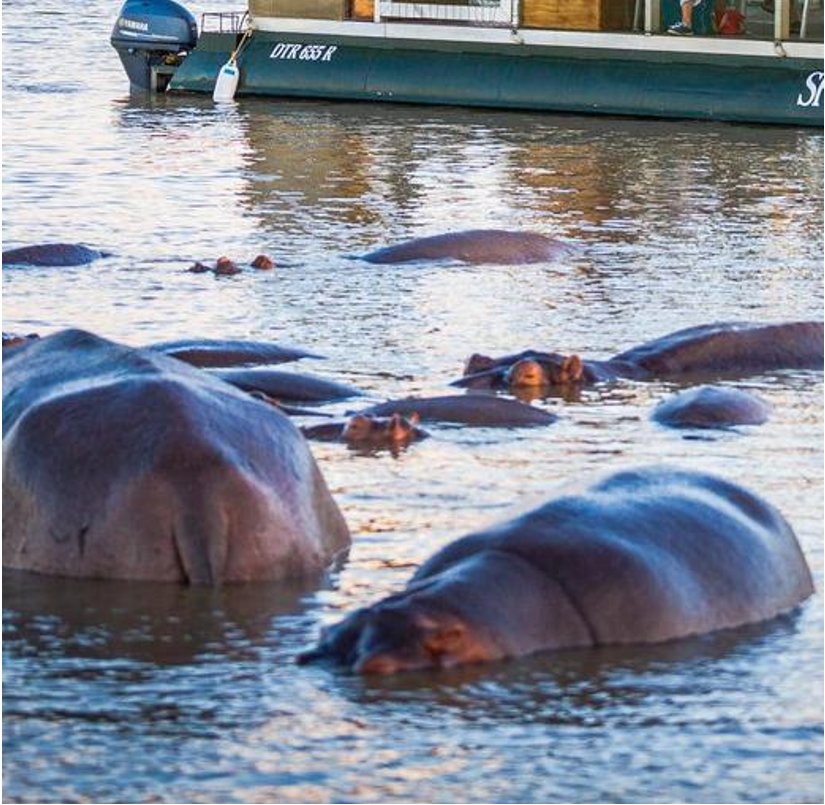
Within a few minutes, the first hippo surfaces.
Only its eyes, ears and nostrils break the surface before it disappears again without a sound. Then another. Then another. Before long you realise there are dozens of them.
People often ask if we ever get used to seeing hippos.
The answer is no.
Not really.
Watching a five-ton animal glide silently through the water still leaves me speechless.
By mid-morning, the estuary belongs to the crocodiles.
They lie perfectly still on the muddy banks, mouths open to regulate their body temperature, looking more like ancient tree trunks than living animals.
Some of these Nile crocodiles are older than many of the visitors photographing them.
Their ancestors survived the dinosaurs.
And here they are, just metres away, reminding us that this estuary has belonged to wildlife long before people arrived.
Then something catches your eye.
Movement in the reeds.
A long tail.
A forked tongue.
A Nile monitor lizard slowly emerges from the vegetation.
There's something prehistoric about them.
They walk with complete confidence, climbing fallen trees, disappearing into the water and reappearing several metres away as if they own the place.
Truthfully…
They probably do.
By lunchtime, the cafés begin filling with visitors swapping wildlife stories.
Someone saw a crocodile catch a fish.
Someone else watched an African fish eagle diving into the estuary.
Another family can't believe they counted more than fifty hippos during their boat cruise.
Here, every lunch conversation somehow becomes a safari story.
The afternoon usually belongs to Cape Vidal.
The drive through iSimangaliso Wetland Park is never predictable.
Sometimes elephants appear beside the road.
Sometimes buffalo.
Sometimes a rhino quietly grazes in the distance.
And sometimes you drive for twenty kilometres without seeing anything larger than a nyala.
That's the beauty of nature.
Nobody performs on command.
Cape Vidal itself never disappoints.
The Indian Ocean stretches endlessly towards the horizon.
On lucky days, humpback whales breach offshore during winter.
Pods of dolphins ride the waves almost effortlessly.
If you arrive during turtle season, you know that somewhere along these protected beaches, endangered loggerhead and leatherback turtles are continuing a journey they've made for millions of years.
As the afternoon cools, birdlife becomes even more active.
Kingfishers dart between branches.
Flamingos feed in the shallows.
Pelicans glide low over the water.
Fish eagles call once again.
Everywhere you look, something is moving.
Something is alive.
Back in the village, sunset paints the sky in brilliant shades of orange and purple.
Restaurants fill with visitors discussing tomorrow's plans.
Some are heading to Hluhluwe-iMfolozi Park.
Others have booked whale cruises.
Many simply plan another boat trip because today's sightings were so incredible.
But the real excitement hasn't started yet.
As darkness falls, St Lucia changes.
People stop jogging.
Cyclists head home.
Visitors become more alert.
Not because the town becomes dangerous...
Because the hippos wake up.
One by one they emerge from the estuary.
Sometimes they wander quietly down McKenzie Street.
Sometimes they graze outside guesthouses.
Sometimes traffic simply waits while a family of hippos crosses the road.
Nobody complains.
Around here, the wildlife always has right of way.
Living in St Lucia teaches you something many places have forgotten.
We aren't separate from nature.
We're simply sharing the neighbourhood.
And perhaps that's why visitors leave with such unforgettable memories.
Not because they saw a hippo.
Not because they photographed a crocodile.
Not because they spotted a monitor lizard basking in the sun.
They leave because, for a few precious days, they experienced a place where wildlife isn't hidden behind fences or confined to distant game reserves.
Here, nature is part of everyday life.
And once you've lived—even briefly—in a town where hippos stroll past your front gate after sunset, every other destination feels just a little less wild.