
🌍 Town Spotlight of the Week: Vredefort: The Remains of Earth's Largest and Oldest Known Meteorite Impact Structure
Vredefort: Where a Collision from Space Shaped the Earth
There are places where the landscape feels beautiful. Then there are places where the landscape tells a story so enormous that it is almost impossible to imagine.
Vredefort, in the Free State, is one of those places.
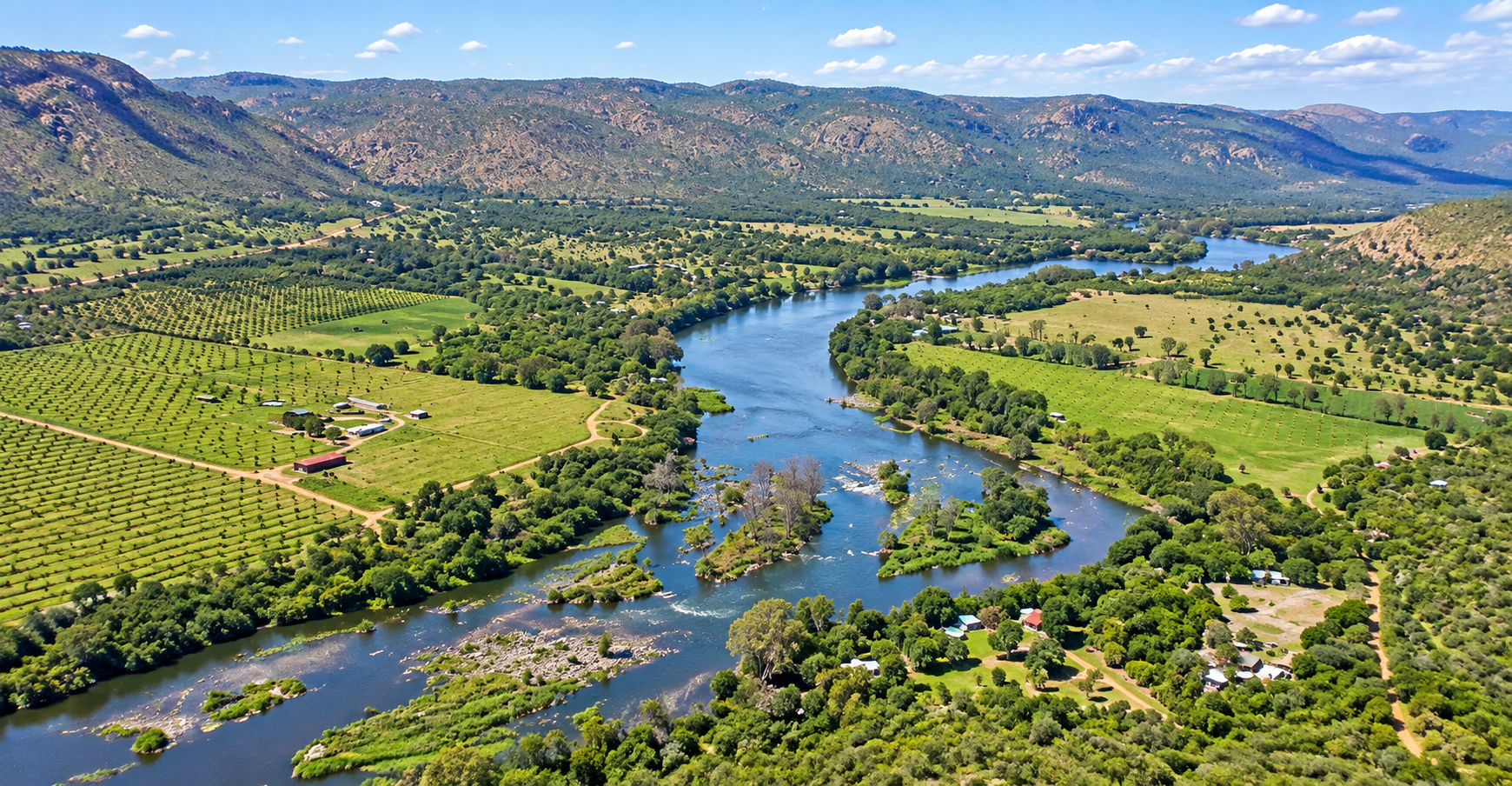
At first glance, you may see peaceful farmland, rocky hills, the Vaal River winding through the countryside and wide-open skies. But hidden within this seemingly tranquil landscape is evidence of one of the most powerful events ever to affect the surface of our planet.
More than two billion years ago, an enormous object from space collided with Earth here.
The impact was on a scale that is difficult to comprehend. The object is estimated to have been several kilometres across, and the energy released by the collision was immense enough to dramatically disturb the Earth's crust over a vast area.
What remains today is known as the Vredefort Dome, the deeply eroded remnant of this ancient impact structure.
And there is something important to understand about Vredefort:
You will not arrive here and see a giant hole in the ground.
The original impact crater has been changed enormously by more than two billion years of erosion and geological activity. Mountains and landscapes have been worn down, rivers have shaped valleys and the Earth's surface has continually changed.
What visitors see today is the much older, much more subtle evidence of that enormous collision.
Look at the landscape differently
Standing among the hills and rocks around Vredefort, it is easy to see only a beautiful Free State landscape.
But the rocks tell another story.
The immense force of the impact pushed, fractured and transformed rocks deep beneath the Earth's surface. Some of the unusual geological formations found in the area are physical evidence of the tremendous pressures created by the collision.
This means that Vredefort isn't simply a place where scientists believe a meteorite once landed.
The rocks themselves carry evidence of what happened.
It is almost like reading a history book that is more than two billion years old — except the pages are mountains, rock faces and geological formations.
An impact older than dinosaurs
The age of Vredefort is one of the things that makes it so extraordinary.
The impact happened roughly 2 billion years ago.
Dinosaurs did not exist.
Humans did not exist.
The world looked completely different from the planet we know today.
Continents were arranged differently, life was still in a very early stage of Earth's history, and the landscape that would eventually become South Africa was part of a vastly different world.
Then, somewhere in this ancient history, an enormous object came hurtling towards Earth.
The collision changed the landscape forever.
From catastrophe to beauty
Perhaps the most fascinating part of Vredefort is the contrast between its violent beginning and its peaceful appearance today.
The Vaal River moves quietly through the landscape. Trees grow along the riverbanks. Farmers work the surrounding land. Rocky hills rise across the horizon.
There is little about the modern landscape that immediately suggests a catastrophic collision from space.
And yet, beneath your feet is the geological evidence of one.
Nature has had more than two billion years to soften the scars.
What was once an immense impact structure has been slowly reshaped by erosion, weather and geological processes into the remarkable landscape we see today.
A place recognised by the world
The importance of Vredefort extends far beyond South Africa.
The Vredefort Dome was declared a UNESCO World Heritage Site in 2005 because of its exceptional geological importance.
It is regarded as the remains of the largest and oldest known complex meteorite impact structure on Earth, and it provides scientists with an extraordinary opportunity to study the effects of a gigantic impact on our planet.
But you don't have to be a geologist to appreciate Vredefort.
You simply need to stop for a moment and look at the landscape.
The rocks.
The hills.
The river.
The enormous open sky.
Then imagine that more than two billion years ago, this peaceful part of the Free State was the scene of a collision on a scale almost beyond imagination.
Vredefort today
Today, Vredefort is not about standing at the edge of a giant crater.
It is about discovering the remnants of one.
It is about exploring a landscape where geology, history and nature come together. It is about understanding that some of Earth's greatest stories aren't found inside museums or behind glass.
Sometimes, they are right there beneath your feet.
And perhaps that is what makes Vredefort so extraordinary.
You can drive through the countryside, stop beside the river, explore the rocky landscape and take in the enormous views — all while knowing that the ground beneath you carries evidence of an event that happened billions of years before South Africa, as we know it today, even existed.
Vredefort is not simply a place where a meteorite once struck Earth.
It is a window into the ancient history of our planet.
🌍 Vredefort — a landscape shaped by a collision from space, and a story written in stone.
Discover Vredefort with TravellingSouthAfrica.co.za
Map it. Plan it. Own it.